
Framework
Delivery that gets you rebooked
8 min read · Reviewed September 2026
Contents
Clients rehire the experience as often as they rehire the work. That is uncomfortable if you think of yourself as a craftsperson, and it is worth accepting quickly, because the experience is the part you can systematise. Here is the whole thing, from the paperwork that comes before the shoot to the check-in a quarter after delivery.
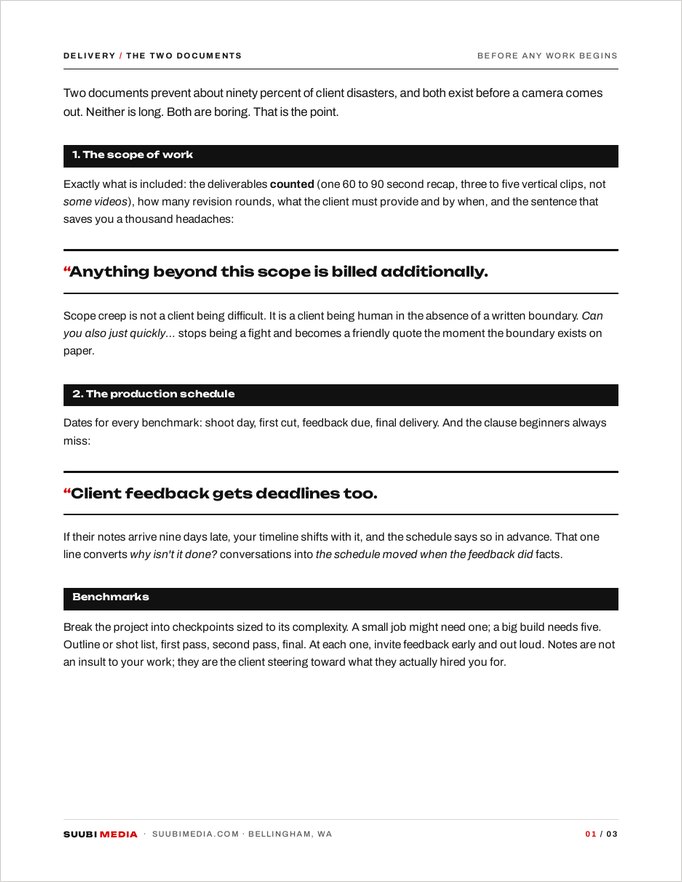
Two documents prevent most disasters
Both exist before a camera comes out. Neither is long. Both are boring, which is the point.
The scope of work spells out exactly what is included: the deliverables counted (one 60 to 90 second recap, three to five vertical clips, not some videos), how many revision rounds, what the client must provide and by when, and the sentence that saves you a thousand headaches.
Anything beyond this scope is billed additionally.
Scope creep is not a client being difficult. It is a client being human in the absence of a written boundary. Can you also just quickly stops being a fight and becomes a friendly quote the moment the boundary exists on paper.
The production schedule gives dates for every benchmark: shoot day, first cut, feedback due, final delivery. And the clause beginners always miss: client feedback gets deadlines too. If their notes arrive nine days late, your timeline shifts with it, and the schedule says so in advance. That one line converts why isn't it done conversations into the schedule moved when the feedback did facts.
Benchmarks and notes
Break the project into checkpoints sized to its complexity. A small job might need one; a big build needs five. At each one, invite feedback early and out loud. Notes are not an insult to your work; they are the client steering toward what they actually hired you for.
- Notes are a symptom. Diagnose before you edit. Clients are excellent at telling you something is wrong and terrible at prescribing the fix. When they say make the logo bigger, treat it as a symptom, work out the real problem (usually: the brand does not feel present enough) and solve that.
- If you have made your case and they still want it their way, the tie goes to the client. It is their money and their product. Losing a relationship over a colour grade is a rookie tax. Do not pay it.
The 48-hour preview
This is the delivery move that costs you one evening and buys you a reputation. Whatever your full turnaround is, get a small taste into the client's hands within 48 hours. A 15-second teaser. Three selects, edited. One hero photo.
| What it does | Why it matters |
|---|---|
| The client relaxes | The work is visibly happening, so the anxious check-in email never gets written |
| Their audience sees your work at peak attention | For an event, the hype window dies by Wednesday. You just handed them something to post while people still care. |
| The full delivery gets a trailer | Anticipation, instead of two weeks of silence |
| You look faster than everyone else | Fast preview, unhurried final. That combination is what clients tell their friends about. |
Communication that keeps clients
- Say we and mean it. Our film, our launch, we're going to hit this deadline.
- Anchor every update to the goal from the first call, not to your process.
- Never disappear. A two-line Tuesday update costs thirty seconds and prevents every anxious email before it is born.
- When something goes wrong, and it will, say so early with the fix already attached.
After delivery: the quarter tap
The project ends; the relationship should not. One month after delivery, check in: how is the video performing, did the gallery get around? Then a light touch every quarter. A hello, a relevant idea, congratulations on something they posted. You are staying top of mind for the moment a need appears, and listening for new problems to build services around.
Ask for the testimonial at the peak, which is the moment they first see the finished work, not three weeks later. Ask for the referral in the same breath. Repeat business is the cheapest revenue you will ever earn, and it is how a client list becomes a company.
Take it with you
Scope, schedule and revision terms, in an editable Word file.